What we are doing to support our community
Image by Marius Jost
Street animals don't have a lobby
These days it feels like everyone has a lobby or a voice.
Every industry and profession has an association or paid lobbyists speaking on their behalf. But homeless cats and dogs – the ones people abandon in our cities – don’t.
Many survive on trash, get hit by cars, are poisoned by people, or freeze in winter.
We are helping street animals directly in the cities where we are living by partnering with vets and city councils.
We never ask our clients for any donation. Instead, we are giving a part of our time to improve the local situation.
This is why we are supporting LeoLife Bulgaria with our time and PR work.
Image by Marius Jost
Our Current Project
A documentary in two languages in Varna, Bulgaria
In Varna, my hometown, there are more than 25,000 street cats. The city government is legally required to have the animals neutered by licensed veterinarians.
But it doesn’t.
The cats in Varna eat from trash bins, freeze in winter, get poisoned by unknown individuals, and spread HIV among each other. Every day you hear their cries during territory fights. The city’s resources for these animals are basically exhausted.
LeoLife Bulgaria keeps reminding politicians and the public that the government has a legal obligation to neuter the animals in a humane way. That is the only way modern cities get such problems under control.
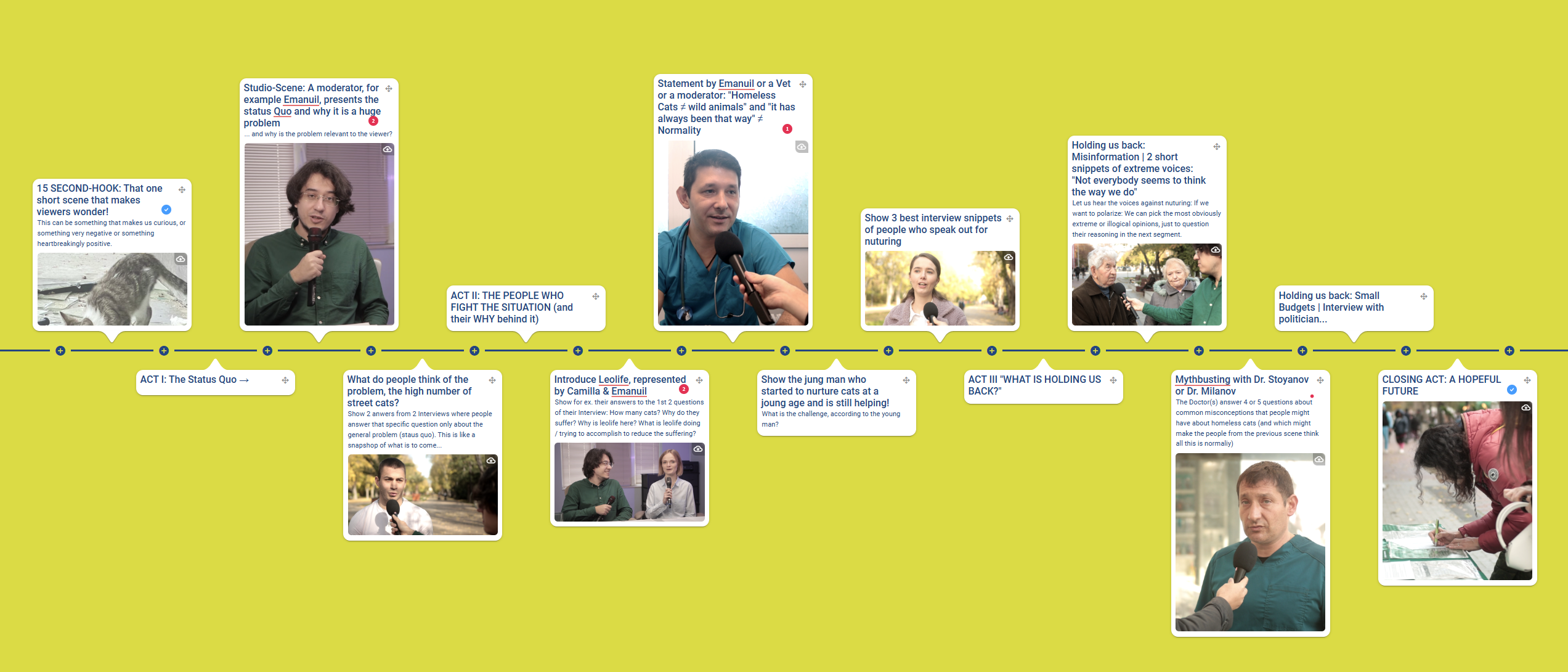
Many Bulgarians and many tourists don’t even realize what’s going on. That’s why I am producing a 45-minute documentary together with LeoLife: “Varna – the Drama of the Forgotten.” The multilingual film shows the current situation, follows the people who help the animals, and tells the story of a young, quiet man who has cared for them since he was a child.
We have already recorded several interviews with veterinarians and spoken with people on the streets of Varna. Some of the interviews revealed shocking beliefs.
Every time I give even a small piece of my time, I realize how much more influence each of us has on our environment than we want to admit.”